
Introduction
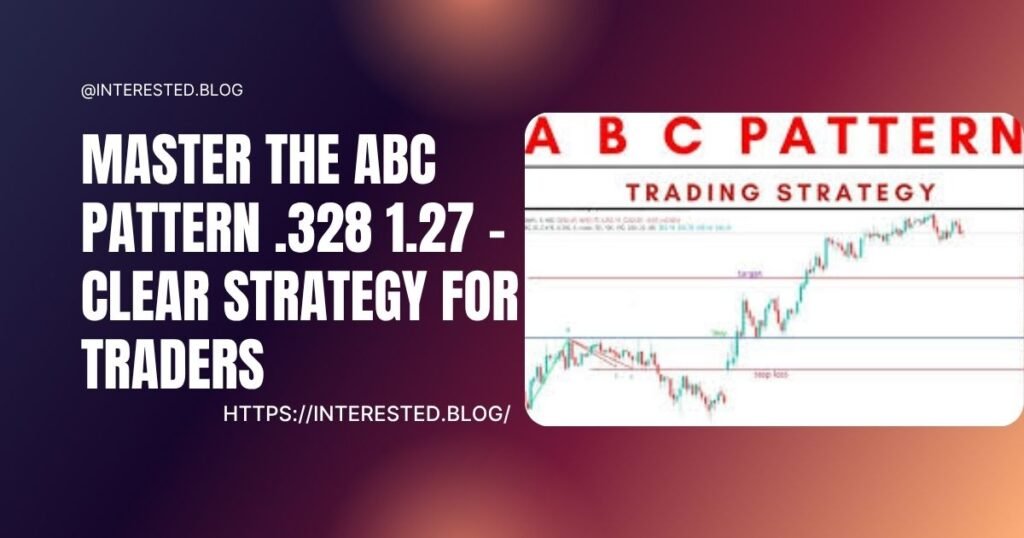
The abc pattern .328 1.27 is a powerful chart formation that traders use to identify precise continuation opportunities in various markets, including Forex, stocks, and crypto. This pattern consists of three legs:
- A → B impulse: The initial move establishing direction.
- B → C pullback: A shallow retracement, approximately 0.328 of AB, signaling temporary consolidation.
- C → Target: An extension towards roughly 1.27 of AB or BC, projecting the next price move.
Unlike standard ABC or ABCD patterns, this ratio combination offers precision and actionable clarity. Many traders overlook the 0.328–1.27 combo, missing high-probability trades. In this guide, we’ll break down how to identify, confirm, and trade this pattern effectively.
Why the abc pattern .328 1.27 matters
The abc pattern .328 1.27 appeals because it provides:
- A measurable structure for both pullback and target.
- Clear entry and exit points, reducing guesswork.
- Greater predictability than generic ABC or ABCD patterns.
Statistically, this pattern occurs frequently in trending markets, especially on 1-hour and 4-hour timeframes, making it a reliable tool when applied with discipline. Later, we will analyze real chart examples to show how consistent setups generate actionable trades.
Anatomy of the abc pattern .328 1.27 swing
Understanding the swing structure is crucial:
- Leg AB: The initial impulse defines trend direction.
- Leg BC: The pullback to roughly 0.328 offers a low-risk entry.
- Leg C → Target: The projected 1.27 extension helps set exit points.
Both bullish and bearish variants exist. Traders should mark pivots A, B, and C and only consider clean swing structures with distinct highs and lows, avoiding noisy or choppy markets.
Selecting A-B: First impulse in abc pattern .328 1.27
A strong AB leg has:
- Momentum in the intended direction.
- High volume and smooth price action.
- Clear timeframe context (e.g., 1H, 4H, or Daily).
Best practices for marking A and B:
- Swing low → swing high for bullish setups.
- Swing high → swing low for bearish setups.
Example:
- Forex: EUR/USD trending up, AB forms from a significant low to the next swing high.
- Stocks: A strong breakout leg in Apple shares forms AB clearly before a shallow pullback.
Measuring the B-C pullback to ~0.328
The 0.328 retracement is shallow, indicating continuation rather than reversal.
- Use Fibonacci retracement tool from A → B.
- Identify point C near 0.328 retracement.
- Acceptable range: 0.30–0.34.
Example scenario: A deeper BC (0.50 or more) increases risk and reduces probability of hitting the 1.27 extension.
Identifying the C point and confirmation
C point definition: The end of the pullback where the next leg begins.
Confirmation signals:
- Candlestick reversal patterns (pin bar, engulfing).
- Confluence with support/resistance.
- Volume spikes indicating renewed momentum.
Tips: Avoid entering prematurely. Wait for confirmation to reduce false signals and noise interference.
Projecting the extension to ~1.27
The 1.27 extension offers a clear profit target:
- Use Fibonacci extension tool A → B → C to mark 1.27 level.
- Observe that prices sometimes overshoot, but risk/reward ratios remain favorable.
Example: ABC pattern in USD/JPY hits the 1.27 extension after C confirms upward momentum.
Risk/Reward: Distance from C to 1.27 target vs stop-loss at C or slightly below.
Time-frames & market contexts
Timeframes: 1H, 4H, and Daily charts provide the best setups.
Markets: Forex, stocks, crypto, and futures all display this pattern.
Context:
- Trending markets: High probability.
- Ranging markets: Lower reliability; structure may fail.
Example: Misusing the pattern in choppy ranges may generate false C points; avoid or adjust with higher timeframe confirmation.
Entry strategies for trading the abc pattern .328 1.27
Entry options:
- At C, confirmed by reversal signals.
- Upon breakout from C in direction of CD leg.
- After retest of C for additional confirmation.
Order types:
- Limit orders for precise entry.
- Market orders if confirmation is strong.
Example trade setup: EUR/USD 4H chart, entry at C, target 1.27 extension, stop-loss just below C.
Stop-loss and risk-management
Stop-loss placement:
- Just beyond C for conservative risk.
- Beyond A for aggressive setups.
Reward-to-risk ratio: Aim for 1:2 or greater based on AB → C → 1.27 structure.
Trade management tips:
- Move stop-loss to break-even after partial target.
- Trail stop to lock profits as price approaches 1.27.
Examples of abc pattern .328 1.27 in real charts
Bullish example: EUR/USD 1H chart:
- AB leg identified
- BC retraces 0.328
- Entry at C confirmed
- Price hits 1.27 extension
Bearish example: BTC/USD daily chart:
- AB leg down
- BC shallow retracement
- Entry at C short
- Target at 1.27 extension reached
Analyze success/failure cases to refine strategy.
Common pitfalls in abc pattern .328 1.27 trading
- Mistaking deeper pullbacks for 0.328 setups.
- Ignoring market context, news, or volatility spikes.
- Targeting 1.27 rigidly without adapting.
- Relying solely on Fibonacci ratio without other confirmations.
Example: USD/JPY pattern fails as C point is invalid; price reverses, causing trade loss.
Combining abc pattern .328 1.27 with other tools
- Trendlines and moving averages for confluence.
- Multi-timeframe alignment to increase probability.
- Oscillator divergence/momentum confirmation at C.
Example: A 50-period moving average acting as support at C improves confidence in entry.
Back-testing and statistical considerations
Track setups with:
- Date, timeframe, AB length, BC retracement.
- Outcome: hit 1.27 or not.
Metrics to monitor:
- Hit rate (success %).
- Average reward/risk ratio.
- Maximum drawdown.
Adjust filters if hit rate is low: stronger AB legs, cleaner swing structure, or higher timeframe confluence.
When the abc pattern .328 1.27 fails
Signs of failure:
- Break of C without continuation.
- ABC structure invalid due to erratic price movement.
Plan B:
- Flatten trade or switch to reversal strategy.
- Consider alternative targets (1.00 or 0.618 extensions).
Example: Price stalls at 1.10 extension and reverses, highlighting need for adaptive management.
Advanced tweaks: adapting abc pattern .328 1.27
- Adjust retracement band: 0.30–0.35 instead of strict 0.328.
- Extension flexibility: 1.20–1.30 instead of 1.27.
- Multiple patterns: nested ABC within larger trends.
- Scaling strategy: partial entry at C, scale into remaining leg toward target.
Example: Partial entry in a bullish extended move allows higher total profit while managing risk.
Summary & actionable steps
ABC pattern .328 1.27 recap:
- Mark AB leg clearly.
- Measure BC pullback ~0.328.
- Identify C with confirmation signals.
- Set entry, stop-loss, and target (~1.27).
- Record results, refine filter, repeat.
Action: Apply in demo accounts to gain experience before live trading.
Final Thoughts
The abc pattern .328 1.27 equips traders with a structured, precise method to trade continuations effectively. With consistent application, proper risk management, and confirmation tools, this method can reduce guesswork and improve confidence. The key is discipline, chart observation, and continuous refinement. Start with demo accounts, track outcomes, and adapt your filters to your preferred markets and timeframes.
FAQs:
Q: What exactly is the 0.328 retracement?
A shallow retracement encouraging continuation rather than reversal.
Q: Why use a 1.27 target instead of 1.618 or 2.0?
1.27 provides a more conservative and frequent target, improving success rate.
Q: Which markets and timeframes work best?
Forex, stocks, crypto; 1H, 4H, and Daily charts have higher probability setups.
Q: Can the abc pattern .328 1.27 be used for reversals?
Possible, but primary use is continuation of AB leg.
Q: How to filter low-probability setups?
Require clear AB momentum, shallow BC, confluence at C, favorable reward/risk.
Read More Content: 196922566080on Walmart